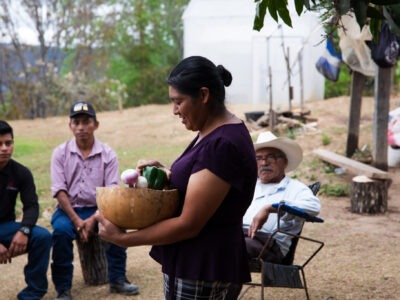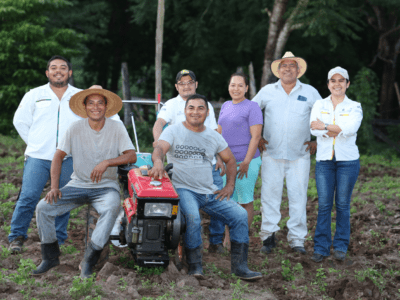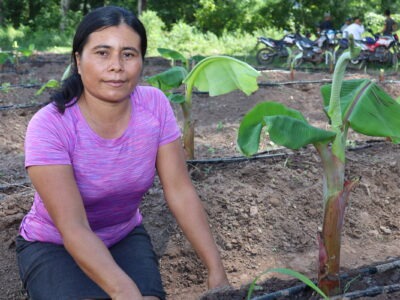

On the hillsides of Lepaterique Norte, in the municipality of La Esperanza, in the department of Intibucá, 10 young people, including five women and five men under the age of 30, earned a living like all young people in their community. They worked as day laborers and cultivated small vegetable plots without many resources.
However, in their short experience, they learned that a critical weakness of local agriculture was the lack of high-quality seedlings — the first link in the chain that determines whether a harvest thrives or fails. This realization gave them the idea to create “Producción de Plántulas Metamorfosis” (Metamorphosis Seedling Production).
Its name says it all: like the butterfly that emerges transformed, this group of young people committed to turning their territory, their knowledge, and their energy into an engine of change. They had already taken their first steps with lettuce production, using drip irrigation, and secured their first client. But they needed a leap in scale to realize their dream.
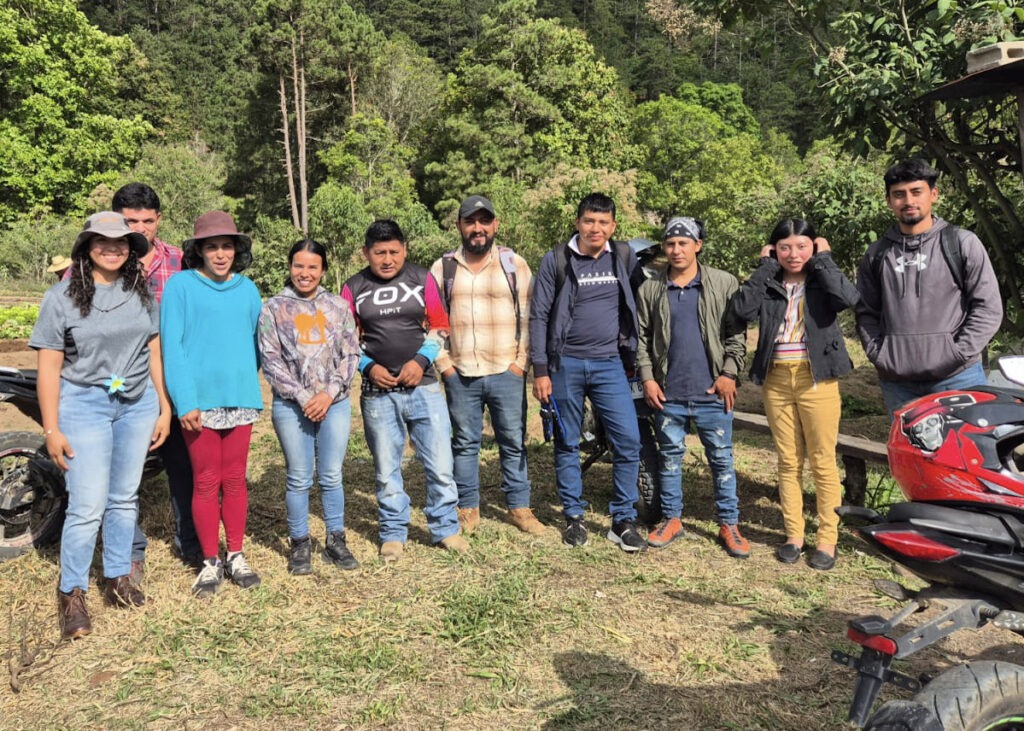
SAG-ProOccidente: The Ally that Propelled Metamorfosis
The arrival of the Integrated Rural Development and Productivity Project (SAG-ProOccidente) in Intibucá was the opportunity Metamorfosis needed. Upon hearing that the project could facilitate climate-smart technologies and provide technical assistance to strengthen the economic leadership of rural women and youth, this group of young people with vocation, experience, and a clear vision for their venture accepted the challenge without hesitation. Thanks to the project’s support, Metamorfosis established an investment plan valued at L.991,777.09. Of this amount, SAG-ProOccidente contributed L.510,957.09 (51.52%) in equipment and infrastructure. Meanwhile, the group contributed L.480,820.00 (48.48%) as an in-kind contribution, a tangible demonstration of their commitment and shared responsibility.
This venture is an example of how the SAG-ProOccidente project is achieving its goals: strengthening ventures fully integrated by young people and developing businesses to access new markets. Metamorfosis is led by a woman and half of its partners are women, promoting gender equality and opportunities for rural women.
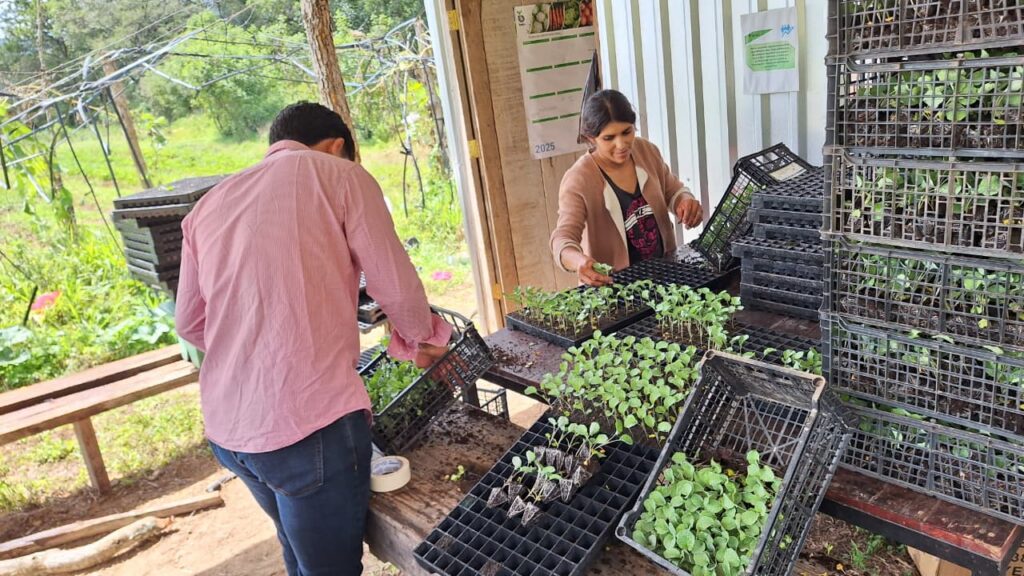
The Transformation: Climate-Smart Technologies Changing the Field
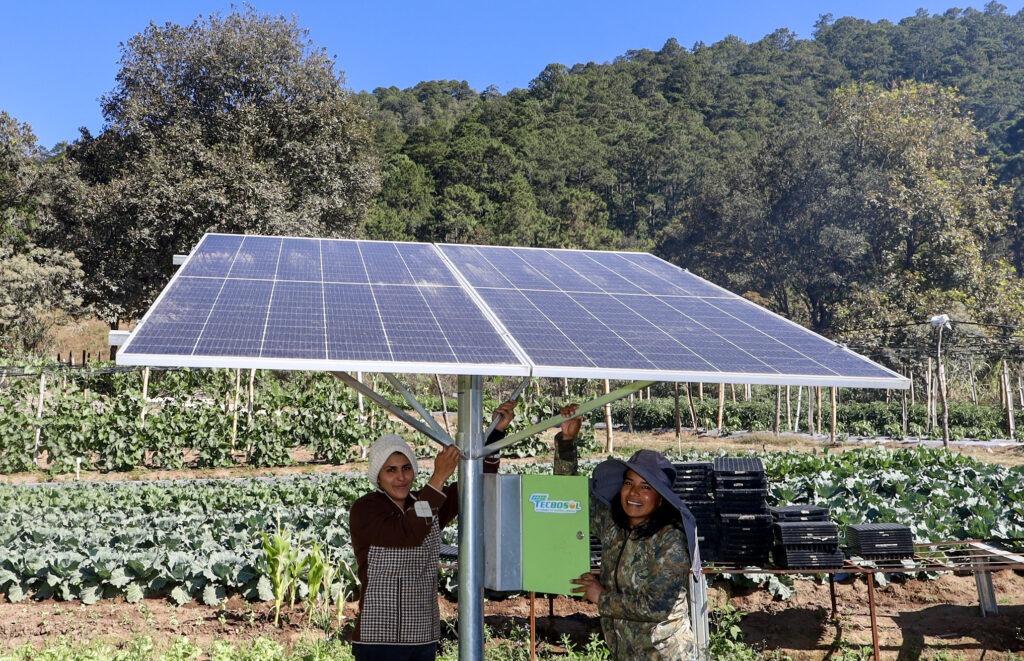
Inside the 250-square-meter greenhouse, built on rented land in Lepaterique Norte, the transformation is evident. Five 23.5-meter-long tables support 685 trays, capable of producing up to 810,000 seedlings per cycle. A solar-powered submersible pump supplies irrigation without relying on fossil fuels, and two 2,500-liter, three-layer tanks ensure a reliable water supply, even during periods of scarcity.
At the same time, the group produces vegetables, including onions, carrots, and lettuce, in open fields, with each crop on 0.18 hectares, using a manual seeder that improves precision and reduces losses. All of this represents an effective adoption of climate-smart technologies.
Youth Leadership and Gender Equality
The fact that 100 percent of group members are under the age of 30 and that half are women is no coincidence; it’s the result of a deliberate inclusion strategy. Yoselyn Alejandra González Mejía leads the venture alongside her colleagues, making strategic decisions, managing resources, and serving as a role model in her community.
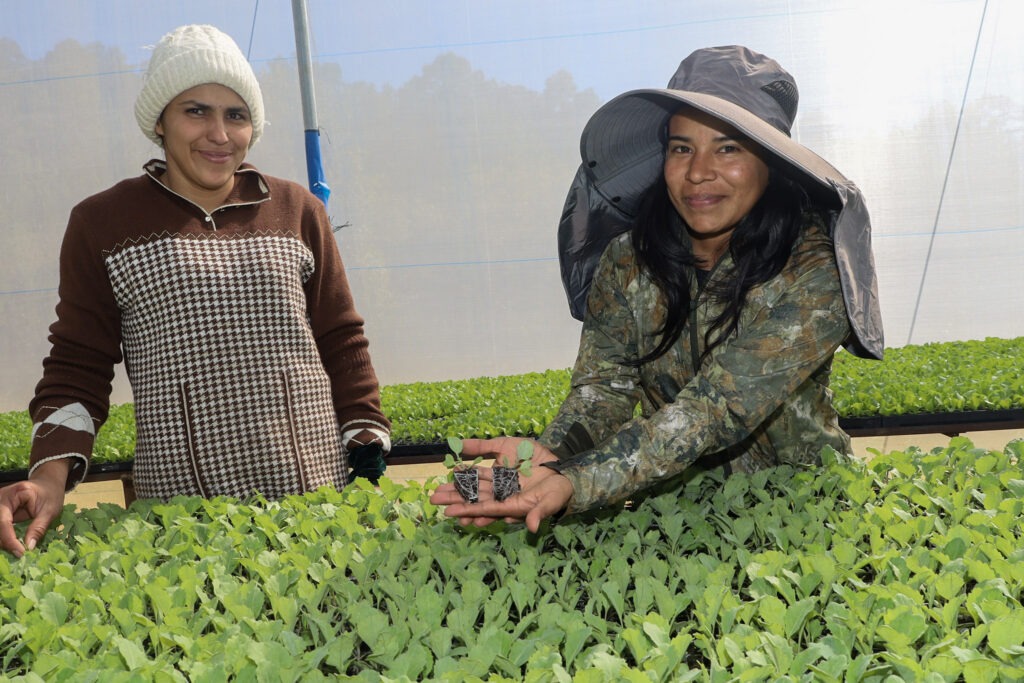
“This began as a dream; thanks to SAG-ProOccidente, it’s a reality. The dream doesn’t end here…we’re going to keep growing.” — Yoselyn Alejandra González Mejía (right), leader of Metamorfosis
In a region where youth migration, especially among men, is a constant reality, Metamorfosis demonstrates that staying is possible. With 10 permanent jobs and additional day laborers, the enterprise becomes a real economic alternative to emigration, offering dignity, professional development, and a sense of belonging to the community.
Connecting Small Producers with New Markets
Metamorfosis doesn’t produce for the sake of staying home. Its main sales point is in the town of La Esperanza, Intibucá, and it has already identified key communities, such as Quiaterique, El Tabor, Guangololo, Quebrada de Lajas, Los Olivos, Los Encinos, and Cofradía. Furthermore, it has established commercial alliances with other production groups supported by SAG-ProOccidente, transforming the project itself into an internal market network that strengthens all its participants.
This marketing model connects rural producers with local consumers, reducing intermediaries and strengthening the community economy. In turn, project participants gain access to new products and markets.
Metamorfosis Continues
The venture is already showing encouraging results, allowing it to look beyond its first production cycle and consider its long-term sustainability. To ensure a continuous supply, the group has begun staggering its plantings and is making steady progress in formalizing its status as a small business, laying the groundwork for orderly and sustained growth.
Each seedling that comes out of the Lepaterique Norte greenhouse holds much more than a productive opportunity. It reflects the commitment and collective effort of 10 young people who decided to stay in their territory, work the land, and build their own future from there.
ABOUT SAG-PROOCCIDENTE
SAG-ProOccidente is a five-year project implemented by ACDI/VOCA and led by Honduras’s Secretariat of Agriculture and Livestock (SAG). SAG-ProOccidente works with multiple partners, including local producers, the private sector, indigenous organizations, and small and medium enterprises, to build sustainable economic and climate resilience and reduce migration out of the country, promoting self-reliance through local ownership.
SAG-ProOccidente is providing technical assistance and training to more than 10,000 agriculture and livestock producers across six departments and 88 municipalities by helping them adopt new climate-smart technologies and practices and improving their access to finance.
Activities take place in the western departments of Santa Bárbara, Copán, Ocotepeque, Intibucá, Lempira, and La Paz, focusing on horticulture, fruit, coffee, cacao, dairy cattle, and those related to cultural products of ethnic origin.
The project is funded by the Inter-American Development Bank (IDB) and the Spanish Agency for International Development Cooperation (AECID) through the Fund for the Promotion of Development (FONPRODE).
Learn more about SAG-ProOccidente.
Learn more about our work in Honduras.