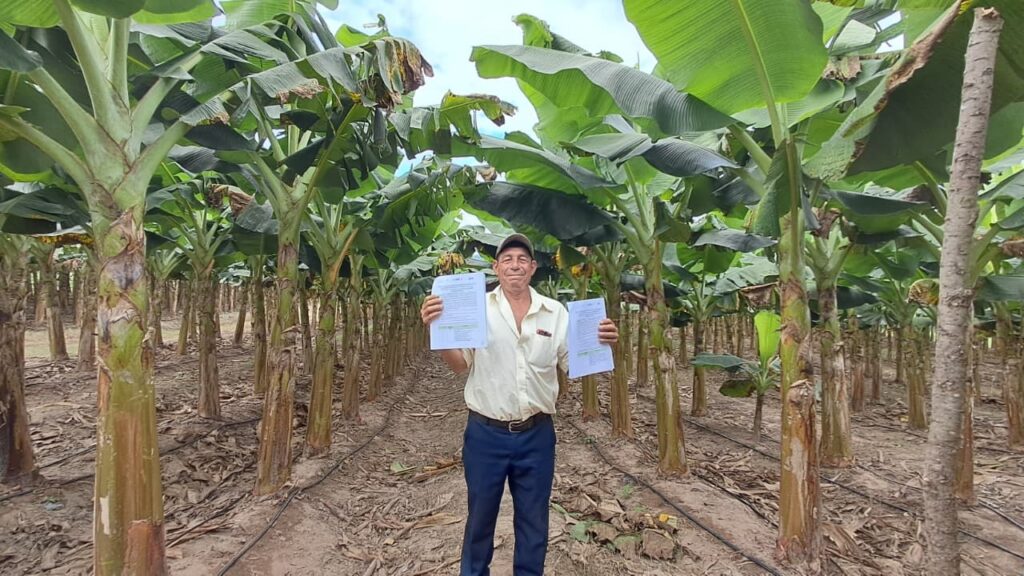
Twenty-nine agricultural producers in the Ulúa Valley of Honduras make up El Centenario Producers Association. For years, their plantain production was held back by two major challenges:
- a deteriorated and inefficient irrigation system, and
- a lack of modern soil-preparation machinery, which led to high labor costs.
Through their partnership with the Integrated Rural Development and Productivity Project (SAG-ProOccidente), the group launched an investment plan that dramatically improved their 18.8 hectares of farmland. Today, these producers are demonstrating how modern technology can transform plantain cultivation in the region.
Ministry of Finance confirms strong project results
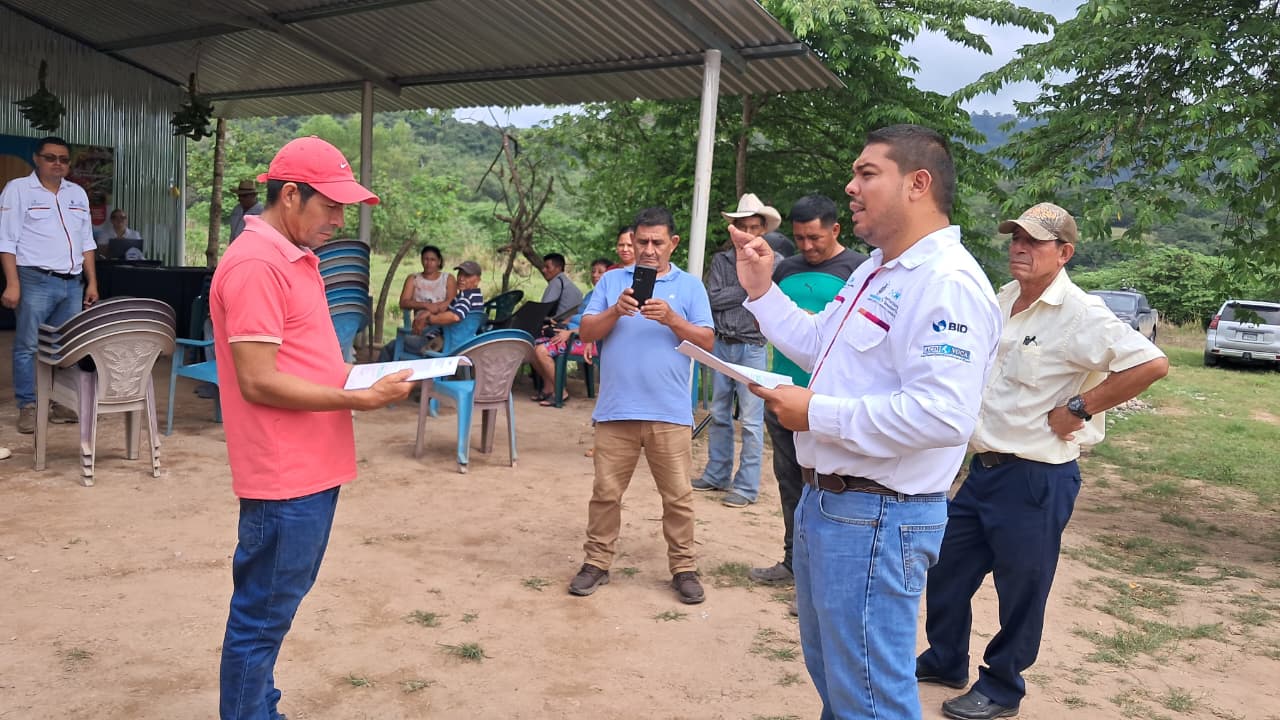
A recent field visit from the Honduras Ministry of Finance (Secretaria de Finanzas Honduras, or SEFIN), through the Undersecretariat of Credit and Public Investment, gave the Ministry an opportunity to verify the impact of the investments firsthand. SEFIN’s assessment affirmed that technical support and new farming technologies are helping revitalize agricultural production in the Ulúa Valley.
Climate-smart tools bring new life to banana production
With co-financing from SAG-ProOccidente, the group invested in new climate-smart technologies to boost productivity and crop quality. The upgrades included
- 29 on‑farm irrigation systems, and
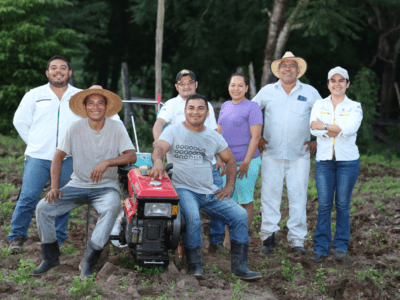
- five roto tillers for mechanized soil preparation.
The improvements allowed the producers to use water more efficiently, reduce their labor costs, enhance soil preparation, and produce higher-quality bananas.
A joint investment with high returns
All 29 producers, including three women, 24 men, and two young people, benefited from the upgrades. According to SEFIN’s findings, the upgrades have led to measurable gains in productivity thanks to more precise and reliable irrigation and modern farming machinery.
The investment amounted to L6,878,171.04, of which L1,083,173.00 was contributed by SAG-ProOccidente and L5,794,998.04 by El Centenario Peasant Production Association.
Capacity building at the center of success
Producers also emphasized the value of the project’s capacity‑building activities. Through SAG‑ProOccidente, they received training in
- good agricultural practices,
- soil preparation and advanced planting techniques, and
- efficient use and maintenance of drip irrigation systems.
This training has strengthened the group’s ability to both adopt and maintain climate‑smart technologies over time.
Key findings from the Ministry of Finance’s visit
SEFIN highlighted the project’s effectiveness in addressing the producers’ biggest obstacles. With irrigation issues resolved and soil‑preparation machinery now available for group use, the association is well‑positioned to achieve
- higher productivity,
- improved crop quality,
- reduced operating costs, and
- increased income for all 29 producers.
To protect the long‑term value of the investments, SEFIN recommended establishing a maintenance fund. SAG‑ProOccidente already promotes sustainability by coordinating with supplier companies to train producers in proper equipment care and upkeep.
A stronger, more resilient plantain value chain
The coordinated effort among SEFIN, SAG‑ProOccidente, and local producers is generating lasting impact for farming families in the Ulúa Valley. By combining technology, training, and community investment, banana cultivation is becoming a more profitable, resilient, and competitive value chain in the region.
ABOUT SAG-PROOCCIDENTE
SAG-ProOccidente works with multiple partners, including local producers, the private sector, indigenous organizations, and small and medium enterprises, to build sustainable economic and climate resilience and reduce migration out of the country, promoting self-reliance through local ownership.
SAG-ProOccidente is providing technical assistance and training to more than 10,000 agriculture and livestock producers across six departments and 88 municipalities by helping them adopt new climate-smart technologies and practices and improving their access to finance.
Activities take place in the western departments of Santa Bárbara, Copán, Ocotepeque, Intibucá, Lempira, and La Paz, focusing on horticulture, fruit, coffee, cacao, dairy cattle, and those related to cultural products of ethnic origin.
The project is funded by the Inter-American Development Bank (IDB) and the Spanish Agency for International Development Cooperation (AECID) through the Fund for the Promotion of Development (FONPRODE).
Learn more about SAG-ProOccidente.
Learn more about our work in Honduras.