
A new study by the Inter-American Development Bank (IDB) highlights something powerful happening in Honduras’s Dry Corridor. Women who lead agri‑food businesses are driving innovation despite the challenges they face. The study found the women entrepreneurs in western Honduras are a largely untapped engine for rural development. Despite having limited access to financing and training, they are often leaders in their sectors. With the right support, they have the potential to significantly strengthen the local economies.
The study comes as part of the Integrated Rural Development and Productivity Project (SAG-ProOccidente), a five-year project implemented by ACDI/VOCA and led by Honduras’s Secretariat of Agriculture and Livestock (SAG) with funding from the IDB and the Spanish Agency for International Development Cooperation (AECID).
The study reports that most women-led micro, small-, and medium-sized enterprises (MSMEs) in the Dry Corridor of Honduras lack formalization, but also exhibit leadership, innovation, and growth potential. The objective of the study, which took place in Copán, Ocotepeque, Santa Bárbara, Intibucá, La Paz and Lempira, was to identify the conditions faced by rural agri-food MSMEs led by women and design development activities around them. The findings confirm what many in the region already know: rural women entrepreneurs work with determination and creativity, but they often lack the resources needed to grow.
Key Findings
- High levels of informality. Sixty-five percent of the women-led MSMEs surveyed lack a legal business structure, and only 23% have an operating permit. This limits their access to markets, resources, and financing.
- Limited financing and training. Just 16% have received a loan and 23% have participated in training programs. Both are key tools for business expansion.
- COVID19 impacts linger. Although most remained operational during the pandemic, many reported higher input costs and lower earnings.
- Strong leadership and innovation. Despite these constraints, women are leading agricultural processing and valueadded activities, demonstrating significant growth potential.
- A clear need for support. Improving access to financing and technical assistance is essential to unlock the full economic potential of these enterprises.
These findings are especially relevant in the Dry Corridor, a region marked by climate vulnerability, poverty, and food insecurity.

How SAG-ProOccidente Is Responding
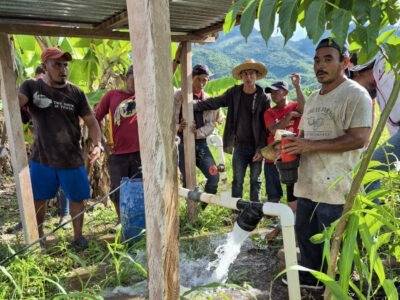
Building on the study’s findings, SAG-ProOccidente has intensified its work to identify, assess, and strengthen rural women-led MSMEs with high potential for growth. The project evaluates each MSME using criteria such as job creation, women’s leadership, and productive activity. This approach helps identify businesses ready to develop investment plans and adopt climate-smart technologies that improve efficiency and sustainability.
Many of these enterprises currently operate with limited resources or informal structures, yet consistently demonstrate the ability to develop new products, maintain operations under pressure, and generate economic value in their communities.
Through both the WeFi initiative and regular project funding, SAGProOccidente is expanding its reach to ensure that more womenled MSMEs receive the support they need to grow.
Support from SAG-ProOccidente includes:
- Business diagnostics
- Specialized technical assistance
- Training in administrative and financial management
- Guidance on adopting ruralappropriate technologies
Building Inclusive and Resilient Rural Economies
ACDI/VOCA’s comprehensive approach within SAG-ProOccidente integrates production, improved business management, market access, financial education, gender equity, and environmental sustainability. This approach ensures MSMEs can address the challenges identified in the IDB study and turn them into opportunities for growth.
The IDB’s findings, combined with the project’s fieldwork, constitute a key starting point for further progress. Supporting womenled MSMEs is not only a question of equity. It is a proven strategy for advancing sustainable rural development, reducing poverty, and building communities that can withstand the growing impacts of climate change.
ABOUT SAG-PROOCCIDENTE
SAG-ProOccidente is a five-year project implemented by ACDI/VOCA and led by Honduras’s Secretariat of Agriculture and Livestock (SAG). SAG-ProOccidente works with multiple partners, including local producers, the private sector, indigenous organizations, and small and medium enterprises, to build sustainable economic and climate resilience and reduce migration out of the country, promoting self-reliance through local ownership.
SAG-ProOccidente is providing technical assistance and training to more than 10,000 agriculture and livestock producers across six departments and 88 municipalities by helping them adopt new climate-smart technologies and practices and improving their access to finance.
Activities take place in the western departments of Santa Bárbara, Copán, Ocotepeque, Intibucá, Lempira, and La Paz, focusing on horticulture, fruit, coffee, cacao, dairy cattle, and those related to cultural products of ethnic origin.
The project is funded by the Inter-American Development Bank (IDB) and the Spanish Agency for International Development Cooperation (AECID) through the Fund for the Promotion of Development (FONPRODE).
Learn more about SAG-ProOccidente.
Learn more about our work in Honduras.